
Why Diversification Can Feel Uncomfortable
If you've been investing for any length of time, you've probably experienced the feeling that part of your portfolio is holding you back. It usually happens when one area of the market is performing exceptionally well while something else seems to be lagging behind. Technology stocks might dominate the headlines for months, or international markets might suddenly outperform after years of trailing U.S. equities. It's only natural to wonder why every investment in your portfolio isn't producing the same results.
I usually tell clients that this feeling is actually one of the best examples of diversification doing exactly what it's supposed to do. The purpose of diversification has never been to own only the best-performing investments at any given point in time. Instead, it's about recognizing that no one consistently knows which investments will lead next year, or even next quarter, and building a portfolio that doesn't rely on getting that prediction right.
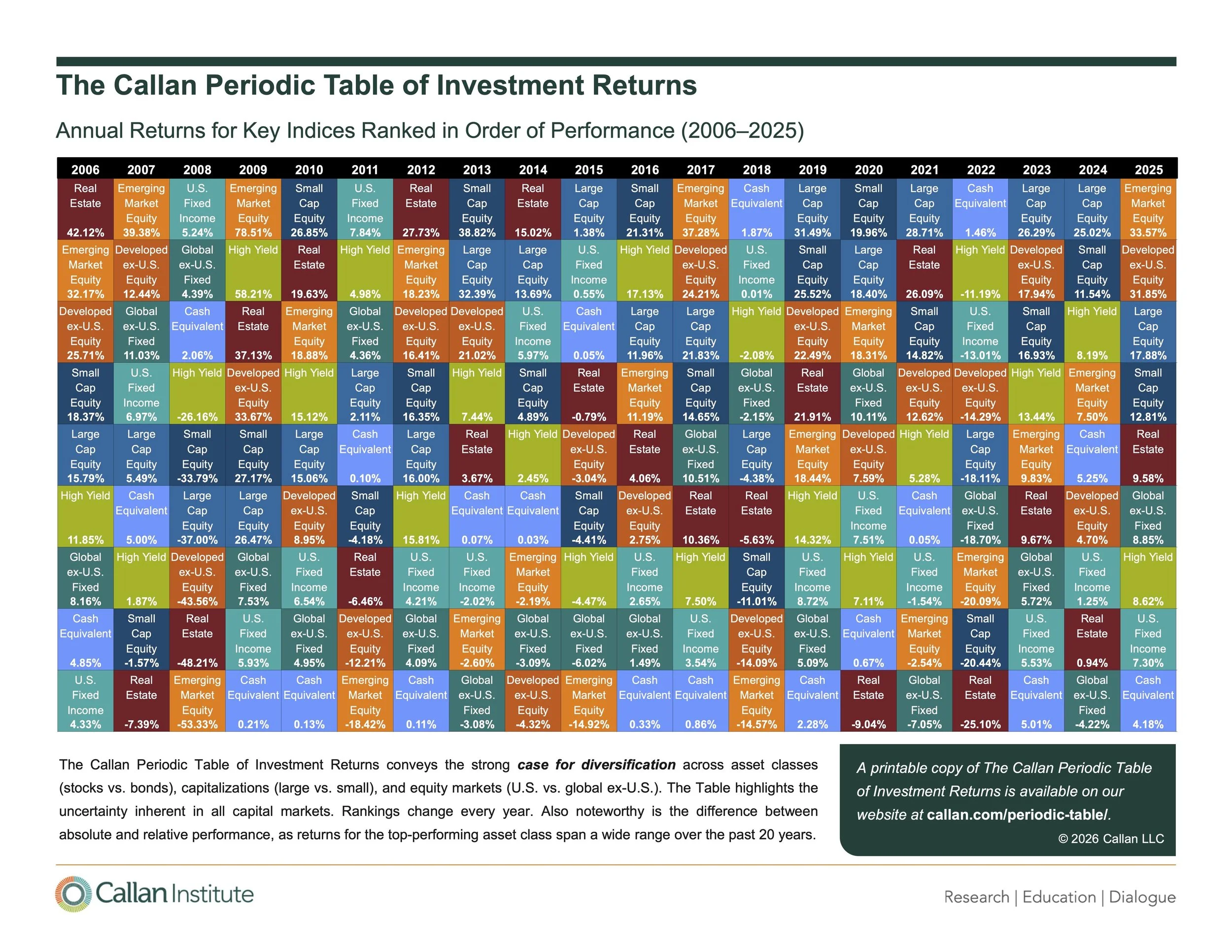
One of the challenges with investing is that we tend to judge a portfolio based on what has happened most recently. If one asset class has had an exceptional year, it's easy to compare everything else against it. The problem with that approach is that market leadership changes over time. Investments that spend several years outperforming can go through long periods of underperformance, while areas that have been overlooked often become tomorrow's leaders. We've seen that pattern repeat itself through different market cycles for decades.
That doesn't mean every investment in a diversified portfolio will always contribute equally. In fact, they shouldn't. Some investments are intended to provide growth during periods of strong economic expansion. Others are designed to offer stability when markets become more volatile. There are also investments whose role is simply to reduce overall portfolio risk, even if that means accepting lower returns during strong bull markets. Each serves a different purpose, and judging them all by the same standard can lead to unrealistic expectations.
One thing I've learned over the years is that diversification often feels the most frustrating immediately before investors appreciate why they owned it in the first place. When markets become unsettled, people rarely complain that they own too many different investments. Instead, they're often grateful that their financial plan wasn't dependent on a single sector, company, or investment style performing well.
When we review portfolios, I spend very little time discussing which investment had the highest return over the last quarter. That's interesting, but it isn't usually the most important conversation. What matters much more is whether the portfolio still aligns with the goals we've established together, whether the level of risk is appropriate, and whether the overall strategy continues to give us confidence over the long term.
Investing isn't about having every investment outperform all the time. It's about building a portfolio that gives you the greatest chance of reaching your financial goals through a variety of market environments. Diversification doesn't eliminate uncertainty, but it does help reduce the need to be exactly right about what comes next, and that's one of the reasons it has remained a cornerstone of long-term investing for generations.
8955491.2 EXP 7/28