
Looking Beyond the Headlines
Financial headlines have a way of making every day feel significant. One morning the focus is inflation, the next it's interest rates, and before long attention shifts to employment data, trade policy, or geopolitical events. While each of those topics deserves attention, I've found that many investors naturally begin to feel as though every headline requires some type of response.
In reality, investing has rarely worked that way.
One thing I've noticed throughout my career is that markets often process information long before it becomes the dominant story in the news. By the time a particular issue appears on the front page, millions of investors around the world have already been evaluating how that information may affect the economy, corporate earnings, and future growth. That's one reason markets sometimes move in ways that seem disconnected from the headlines people are reading.
This doesn't mean current events should be ignored. Economic reports, Federal Reserve decisions, inflation, and corporate earnings all influence financial markets over time. Understanding what's happening helps us have better conversations about risk and the broader economic environment. The challenge comes when investors assume that every new development should lead to immediate changes in their financial plan.
Most successful long-term investors I've worked with don't spend their time trying to anticipate tomorrow's headlines. Instead, they focus on decisions they can actually control. They continue saving consistently, maintain an investment strategy appropriate for their goals, review their financial plan regularly, and make adjustments when their personal circumstances change rather than simply because the news cycle has changed.
That approach may sound less exciting than reacting to every market story, but it has an important advantage. It encourages decisions based on long-term objectives instead of short-term emotions. Markets have experienced recessions, periods of high inflation, financial crises, wars, political change, technological revolutions, and countless other events over the decades. Every one of those periods produced headlines suggesting that the current situation was unlike anything investors had faced before.
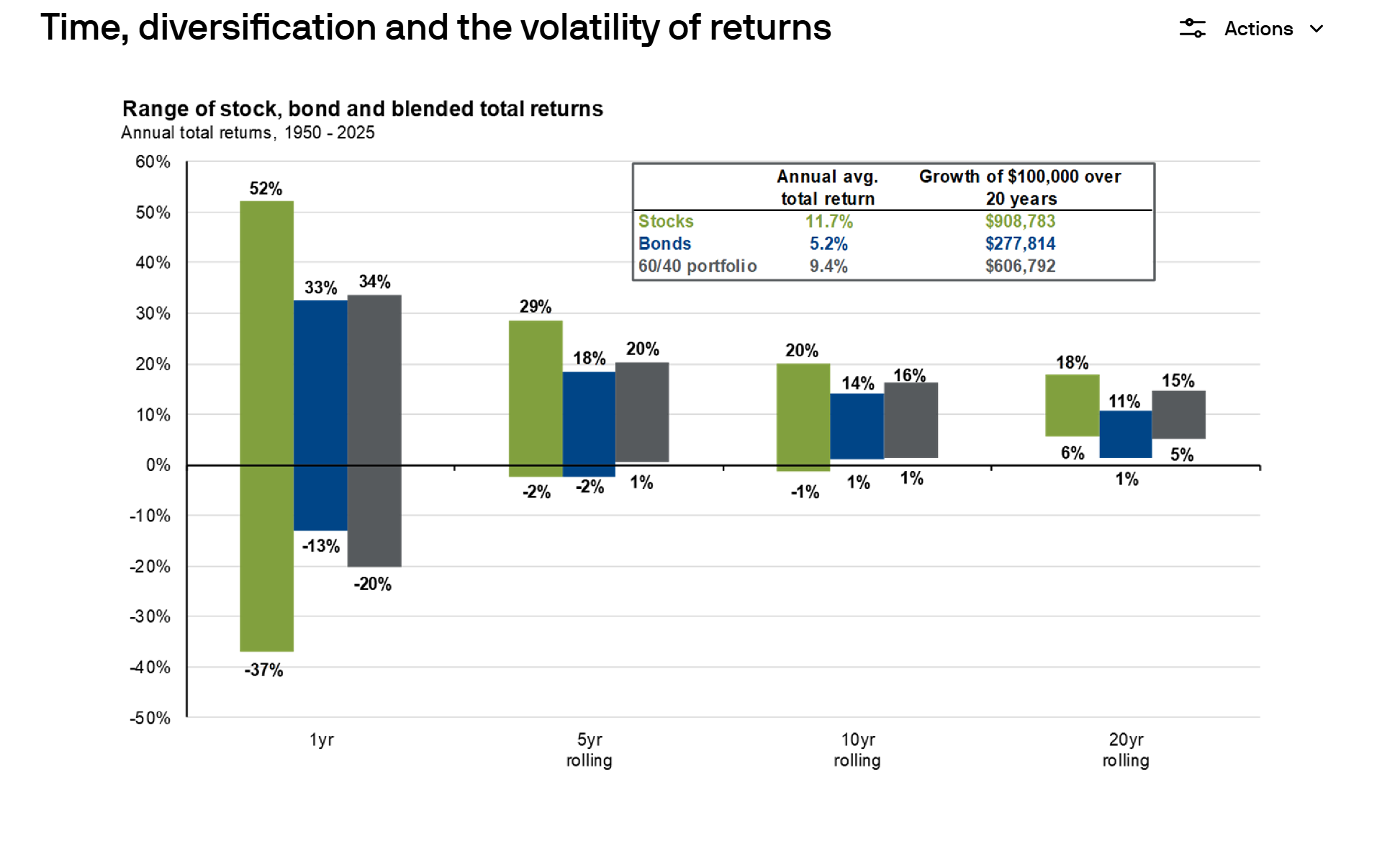
Yet through all of those environments, patient investors who remained focused on a disciplined plan were generally rewarded for maintaining perspective. That doesn't mean the journey was always comfortable, nor does it suggest that markets move steadily higher. It simply reminds us that short-term uncertainty has always been part of long-term investing.
When clients ask me about the latest headline, I'm always happy to discuss it. Those conversations are important because they help provide context and answer questions that naturally arise during periods of uncertainty. More often than not, however, we eventually return to the same discussion we've been having for years: Are your goals still the same? Does your current strategy continue to support those goals? Has anything in your personal life changed that should influence your financial plan?
Those questions tend to have a much greater impact on long-term success than whatever headline happens to dominate today's news.
8955491.2 EXP 7/28